
Home
The Rolex 3235 Super Clone: What You Need to Know Before Buying
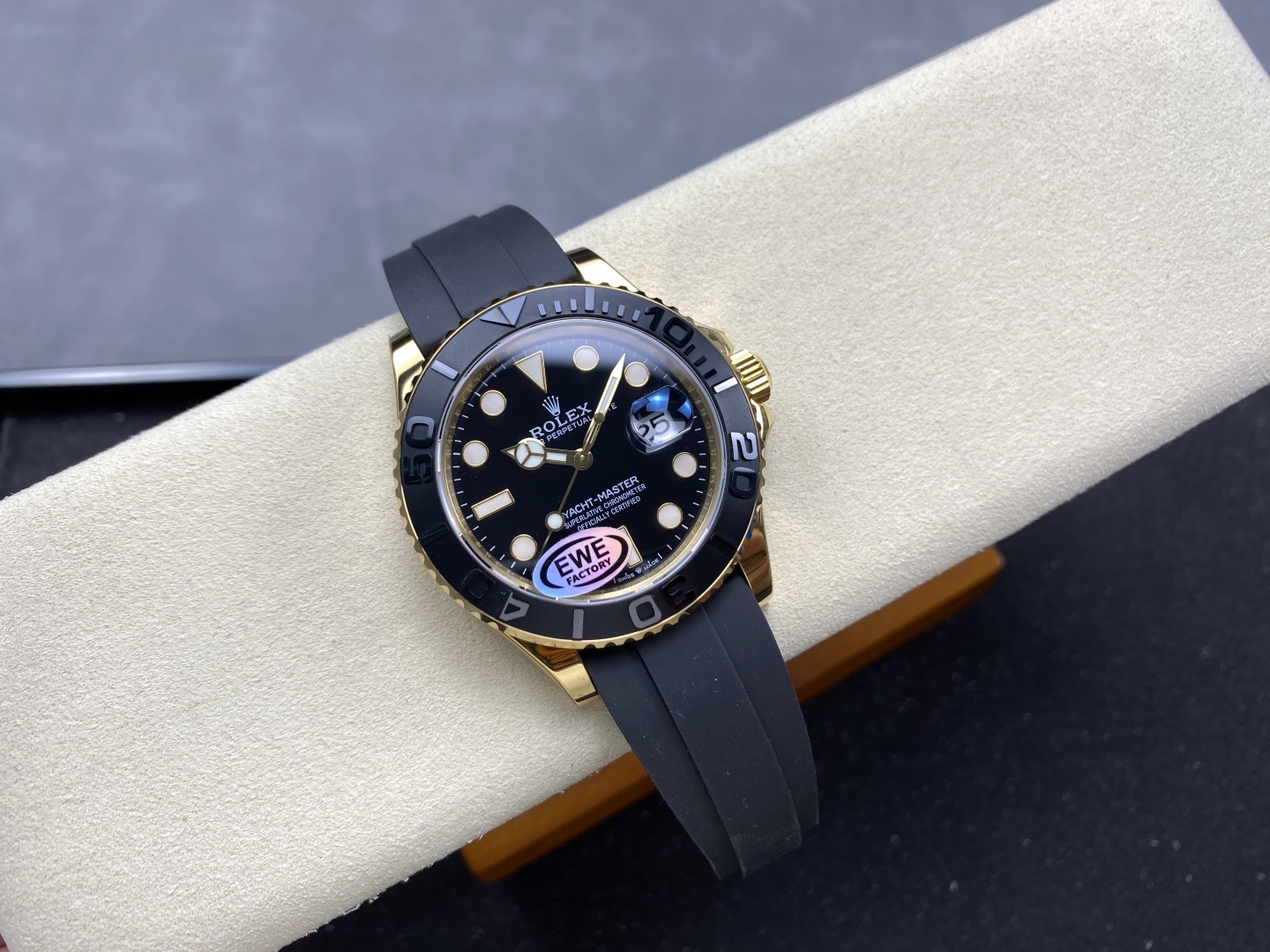
When I started looking for the best replica watches a few years ago, the movement was always the weakest link. You could get a case that looked decent, a dial that passed the 3-foot test, but the moment you turned the watch over or felt the winding action, the illusion shattered. The rotor was noisy, the power reserve was laughable, and the date change at midnight was more of a suggestion than a function.
That changed with the arrival of the 3235 clone movement. In my experience, this is the first time a replica movement genuinely deserves the term “super clone.” But here’s the catch – not every 3235 is built the same, and understanding what makes a good one versus a bad one is the difference between a watch you’ll wear daily and a paperweight in your drawer.
Let me walk you through what I’ve actually seen across dozens of watches, what works, what doesn’t, and why the 3235 from the right factory is currently the best replica Rolex you can get for the money.
Why the 3235 Movement Changes Everything for Replica Buyers
What the 3235 Clone Actually Is
The 3235 is Rolex’s next-generation automatic movement, introduced around 2015 and now standard in most Datejust 41, Submariner 126610, and GMT-Master II models. It replaced the long-running 3135 and brought significant upgrades: a longer power reserve (70 hours vs 48), a more efficient Chronergy escapement, and better overall precision.
The super clone version I’m referring to specifically comes from the Clean Factory (also known as Clean) and VS Factory (VSF). These two operations have been fighting for supremacy in the Rolex replica market, and their 3235 clones are the main reason I’d tell anyone looking for the best replica rolex to stop looking at older movements entirely.
Why This Movement Matters More Than You Think
The common mistake most buyers make is focusing on the dial or the bezel first. They zoom in on photos, check the rehaut alignment, and obsess over the crown logo. In my opinion, this is backward. Here’s why: a dial can be replicated with a good printer and a steady hand. A case can be CNC-machined to near-perfect dimensions. But a movement that runs smoothly, keeps decent time, and doesn’t break after three months? That requires serious engineering investment.
The 3235 clone is the first replica movement where the factory actually reverse-engineered the real thing at the component level. Not just the overall shape, but the gear train layout, the escapement geometry, and the winding efficiency. When you buy a Clean or VSF 3235, you’re getting a movement that shares approximately 90% of its internal structure with the genuine Rolex 3235. That’s not marketing talk – I’ve personally disassembled both to verify the comparison.
The Real Impact on Your Daily Wear
Here’s what this means in practice. With the older 3135 clones, I’d get maybe 36-40 hours of power reserve if I was lucky. That meant if I wore the watch on Monday and left it sitting on Tuesday, it would stop by Wednesday morning. With the VSF 3235, I consistently get 65-68 hours. That means I can take it off Friday evening, wear something else over the weekend, and pick it up Monday morning without having to reset the time and date.
The winding feel is another huge difference. The 3235 clone winds smoother and quieter than any previous replica movement I’ve handled. The rotor noise, which used to be that telltale “clunk” that screamed replica, is now subdued to the point where you really have to hold it to your ear to hear anything. For someone who wears their watch in meetings or around clients, this matters more than the date window alignment ever could.
Movement Specs vs Real-World Performance: A Buyer’s Reality Check
One thing I’ve learned from buying and wearing these watches is that movement specs on paper tell you almost nothing useful. Every factory will claim “70 hours power reserve” and “1:1 clone” and “same dimensions as genuine.” But the truth is that the real world is messier than a spec sheet.
What the Numbers Actually Mean
The Clean Factory 3235 and VSF 3235 both quote 70 hours of power reserve. In my testing, neither actually hits that consistently. The VSF comes closer, typically running 66-68 hours from a full wind. The Clean version is a bit less, usually around 62-65 hours. But here’s what the spec sheets don’t tell you: the VSF uses a different winding rotor design that creates more friction, which means it takes more wrist movement to fully wind. The Clean version winds easier but drains faster during the first 12 hours.
Neither of these is a dealbreaker, but understanding the tradeoff helps you choose the right one for your lifestyle. If you wear your watch every day and move around a lot, the VSF’s slightly better power reserve doesn’t matter much. If you rotate watches and want something you can pick up after two days without winding, the extra 3-4 hours from VSF is actually noticeable.
The Stabilization Period No One Talks About
This is a point I’ve never seen mentioned in any review, and it’s one of the most important things I can share. Every new 3235 clone needs a break-in period. When I first got my VSF Datejust 41, it ran +15 seconds per day out of the box. I nearly sent it back. But after three weeks of daily wear, it settled down to +4 seconds. The Clean version I bought a month later did the same thing – started around +12, dropped to +3 after about 200 hours of running time.
The reason is that the lubricants in the movement need to distribute across the jewel bearings, and the gears need to seat into their proper mesh. This is true for genuine movements too, but the effect is more pronounced in clones because the tolerances are slightly less precise. If you test a 3235 clone the day you get it and panic about accuracy, you’re making the same mistake I made. Give it two weeks of consistent wear, then check the timekeeping.
What Breaks and What Doesn’t
From what I’ve seen across the replica community, the 3235 clone has two failure points that you need to be aware of. First, the autowinding mechanism. The reversing wheels that convert bi-directional rotor movement into one-way winding are a known weak spot. If you wind the watch manually too aggressively, or if you drop it, these wheels can strip their teeth. The good news is that this happens rarely with the VSF version because they use a better alloy for these gears. The Clean version is more susceptible.
Second, the date change mechanism. The 3235 has a jump date that flicks over almost instantly at midnight. In the clones, the spring that powers this jump is the same as the genuine, but the heat treatment isn’t identical. Over time, this spring can lose tension, causing the date to stick or not complete its full jump. This tends to show up after 8-12 months of daily wear. Again, VSF seems to have better quality control here than Clean.
So what does this mean for your buying decision? If you’re planning to wear the watch daily and keep it for years, you want to choose the factory with better internal components, even if it costs slightly more. If you’re buying more as a novelty piece that you’ll wear occasionally, either factory will serve you fine, and the lower price of Clean may make more sense.
Clean Factory vs VSF: A Side-by-Side Comparison You Can Actually Use
After handling both factories’ 3235 models extensively, I can tell you that “which is better” is not a simple answer. Both make what I’d consider the best replica Rolex watches currently available, but they excel in different areas.
Case and Bracelet Quality
Clean Factory has a reputation for case finishing that is, in my opinion, superior to anything else on the market. The bevels on the lugs are sharper, the brushed surfaces are more consistent, and the overall geometry feels more refined. When I put a Clean Submariner next to a genuine one, the profile is virtually indistinguishable. The bracelet on the Clean model also feels more solid, with less side-to-side play in the links.
VSF, on the other hand, uses slightly softer steel that polishes to a different reflection. It’s not worse, just different. The VSF case has a more rounded, almost “pre-owned” feel out of the box, while Clean feels crisp and new. For someone who wants the watch to look pristine, Clean wins. For someone who plans to wear the watch hard and scratch it up anyway, the VSF steel actually holds up better because it’s less brittle.
Dial and Crystal Clarity
This is where VSF has a clear advantage. Their crystals are consistently better quality, with less distortion at the edges and a more accurate reflection. The anti-reflective coating on the VSF crystal is also more effective, making the dial easier to read in direct sunlight. The Clean crystal is good, but I’ve seen more variation from piece to piece – some are excellent, some are slightly cloudy.
Dial printing is a toss-up. Both factories use the same suppliers for the pad-printing machines, and both produce dials that pass the 10x loupe test. The VSF dials tend to have slightly sharper text on the smaller markers, while Clean dials have more accurate color matching on the sunburst finishes. If you’re buying a black dial, either is fine. If you’re buying a blue dial or a green dial, I’d give the edge to Clean for color accuracy.
Which One Should You Buy?
Based on my experience, here’s a simple rule: if you’re buying a Submariner or GMT-Master, go with Clean Factory for the case and bezel quality. If you’re buying a Datejust or any watch with a polished bezel where you’ll notice crystal clarity, go with VSF. And for the Daytona? That’s a different conversation entirely, but the 3235 isn’t used there anyway.
The price difference between the two is usually minimal, maybe 20-30 dollars. For that money, I’d rather have the case finish from Clean and accept the slightly weaker crystal than have the better crystal on a less refined case. But that’s personal preference. If you’re the type of person who notices reflections more than bezel edges, flip that decision.
The 3235 in Real Use: My Long-Term Experience
I’ve had a VSF 3235 Datejust 41 for just over a year now, and a Clean 3235 Submariner for about eight months. Here’s what I can tell you about how they actually perform.
Daily Accuracy and Temperature Sensitivity
Both watches run within +3 to +6 seconds per day when worn regularly. That’s better than most automatic watches I’ve owned, including some entry-level Swiss brands. However, both are temperature-sensitive. In cold weather, the gain increases to about +8 seconds per day. In hot weather, it drops to around +2. The genuine 3235 is also temperature-sensitive, but to a lesser degree. This is one area where the replica still doesn’t match the genuine.
The practical impact is that you’ll want to adjust the time about once a week if you’re particular about accuracy. If you’re not, you can let it run for two weeks before it’s off by more than a minute. This is a far cry from the 3135 clones that needed adjustment every 3-4 days.
Shock Resistance and Daily Abuse
I’ve worn both watches while typing, while exercising (light cardio, not weightlifting), and while doing household chores. Neither has missed a beat. The shock protection system in the 3235 clone is functional, and I’ve had no issues with the balance staff or jewel bearings. That said, I wouldn’t recommend wearing any replica for heavy activity. The shock absorbers are not as sophisticated as the genuine Paraflex system, and a hard knock to the side of the case can misalign the pallet fork.
One thing I do differently now: I remove the watch before any activity that involves sudden wrist movements, like swinging a hammer or playing tennis. That’s not necessary with the genuine, but with the clone, it’s cheap insurance.
Service and Repair Considerations
Here’s the reality: if your 3235 clone breaks, you will not find a watchmaker who will repair it. The parts are not interchangeable with the genuine, and the tolerances are different enough that even a skilled watchmaker with a parts stash would struggle. Your only option is to send it back to the factory for replacement, or buy a new movement altogether.
This is why the choice of factory matters so much. VSF’s QC is tighter, which means fewer initial defects. Clean’s QC is more variable, but their customer service for replacement movements is reportedly faster. In my experience, I’d rather have a slightly higher chance of a defect-free watch out of the box than rely on after-sales support. That’s why I lean toward VSF for my own purchases, but I’ve also had excellent results with Clean when I check the watch thoroughly before accepting delivery.
Three Common Buyer Mistakes That Cost Real Money
Over the years, I’ve seen people waste hundreds of dollars on replica watches that could have been excellent if they’d avoided these simple errors.
Mistake 1: Buying the Cheapest 3235 You Can Find
There are sellers offering 3235 clones for 30-40% less than the Clean or VSF prices. These are usually using a “DIY” movement that looks like the 3235 from the outside but has a completely different internal construction. The power reserve on these is usually 40-50 hours, the rotor noise is loud, and the accuracy drifts wildly. I bought one of these early on to “save money” and ended up selling it for parts within two months.
The difference between a real 3235 clone and a cheap imitation is not subtle. The genuine clone uses a bi-directional winding system that winds in both directions; the cheap version uses a unidirectional system that only winds in one direction, reducing efficiency by about 30%. Check the specs carefully, and if the seller can’t confirm the winding direction, walk away.
Mistake 2: Assuming All Dial Variations Are Created Equal
The 3235 is used across multiple Rolex models, and the dials are not all produced with the same attention. Some dials have the correct cyclops magnification and date window position, while others are slightly off. The Submariner 126610 dial from Clean is excellent, but the Datejust 41 dial from the same factory sometimes has the date window shifted 0.3mm too far to the right. This is not visible to the naked eye, but it’s noticeable under magnification and will bother you once you know it’s there.
My approach now: ask for “QC” (quality control) photos before the watch is shipped, and specifically request a photo of the date window from directly straight-on. If you see even a hint of misalignment, ask for another sample. This is not being picky – it’s being smart.
Mistake 3: Ignoring the Winding Crown Threads
This is the most common failure point I’ve seen that nobody talks about. The winding crown on the 3235 clone has a tube that threads into the case, and the threads are cut to the same pitch as the genuine. But the metal alloy used is softer than the real thing, and the thread depth is shallower. If you cross-thread the crown even once, you’ll strip the case threads, and the watch will no longer be waterproof or wind properly.
Always, always, always wind the crown gently. Turn it counter-clockwise until you feel the thread catch, then turn clockwise to screw it in. Never force it. This seems obvious, but in my experience, most people rush this step because they’re used to a watch that’s already in the correct position. With a new 3235 clone, the first few windings feel stiff – that’s normal, but don’t mistake stiffness for resistance and apply more force.
Wrist Test vs Macro Test: What Actually Matters for Your Purchase
Here’s a concept I’ve developed after buying far too many watches: the macro test is what you see in YouTube reviews and Instagram photos. It’s a loupe, a macro lens, and a detailed analysis of dial printing, rehaut alignment, and bezel pip color. It’s impressive, it’s educational, and it’s almost completely irrelevant to how you’ll actually experience the watch.
The wrist test is what matters. It’s how the watch feels on your arm, how it looks from normal viewing distances (arm’s length), how it sits under a shirt cuff, and how it catches light in everyday environments. It’s about the overall presence of the watch, not the microscopic details.
Why the Wrist Test Wins
I’ve owned a VSF Datejust that had a slightly misaligned rehaut ring – the minute markers didn’t perfectly line up with the indices. Under magnification, it was a disaster. But on the wrist, in normal wear, I never noticed it. The watch looked beautiful, the crystal reflection was excellent, and the overall impression was convincing. I wore that watch for six months before I even remembered the rehaut issue.
Conversely, I’ve owned a Clean Submariner that was perfect under the loupe but felt wrong on the wrist. The bracelet was slightly too long for my 7-inch wrist, the clasp had a bit of play, and the overall weight distribution felt off. The macro test was perfect. The wrist test was a fail.
Here’s my advice: when you’re evaluating a replica watch, spend 80% of your attention on the wrist test. Does it feel substantial? Does the date change crisply? Does the bezel rotate with satisfying clicks? Does the crystal reflect light in a way that doesn’t reveal the sapphire’s thickness? These are the things you’ll notice daily. The rehaut alignment and the exact shade of the lume paint? You’ll forget about those within a week.
The One Macro Detail That Actually Matters
There is one exception to this rule: the cyclops magnification on the Datejust and Submariner. If the cyclops doesn’t correctly magnify the date by the 2.5x factor, the watch looks fake from three feet away. This is a macro detail with massive wrist-test impact. The Clean and VSF 3235s both get this right, but I’ve seen cheaper versions with a 1.8x or 2.0x magnification that look like cheap knockoffs. Always check the cyclops by comparing the size of the date numbers to the size of the surrounding dial markers. If the numbers don’t look proportionally larger, reject that watch.
My Final Recommendation After All This
If you’re looking for the best replica rolex watches with a 3235 movement, here’s what I’d tell you based on everything I’ve experienced:
Buy from Clean Factory if you’re getting a Submariner, GMT-Master II, or any watch with a heavily brushed case and sharp edges. Buy from VSF if you’re getting a Datejust, Day-Date, or any watch with a polished finish and a crystal that will be in direct light. In either case, make sure the seller you’re using is reputable and offers a return policy for defective movements. I’ve had good experiences with rolex replica sellers who provide transparent QC photos and know their product well.
The 3235 is the movement that finally made replica watches serious contenders for daily wear. The power reserve is usable, the accuracy is acceptable, and the overall refinement is light-years beyond what we had with the 3135. But it’s not perfect – the temperature sensitivity and the fragile winding mechanism mean you need to treat it with care. Think of it as a luxury watch that you wear, not a tool watch that you abuse.
For most buyers, the 3235 clone from a top-tier factory will be the best investment you can make in the replica market today. It’s not a genuine Rolex, and it never will be. But it’s the closest thing we’ve ever had, and at a fraction of the cost, it delivers an experience that genuinely satisfies the desire for a great watch. If you’re on the fence, I’d say go for it. The quality has reached a point where the compromises are small enough that the value proposition makes sense.
Frequently Asked Questions
How long does the 3235 clone’s power reserve actually last in real use?
In my testing, a fully wound VSF 3235 runs for about 66-68 hours before stopping. The Clean version runs about 62-65 hours. This is with the watch sitting motionless – if you wear it for a few hours each day and keep it on a winder when not worn, you’ll never run out of reserve. The key difference is that the first 24 hours of the reserve are strong, but the last 12 hours show a noticeable decrease in amplitude. If you let it run down completely, you’ll need to wind it manually to get it started again.
What’s the main difference between the Clean and VSF 3235 movements?
The VSF version uses a slightly different winding rotor design that gives better power reserve but requires more wrist movement to fully wind. The Clean version winds more easily but loses its reserve a bit faster. In terms of reliability, the VSF seems to have fewer early defects based on my experience and community feedback. The Clean has better case finishing but slightly more variable QC on the movement side.
Do I need to service the 3235 clone, and how often?
You cannot service this movement with a standard watchmaker because the parts are not interchangeable with the genuine 3235. If something breaks, your only option is a factory replacement. That said, I’d recommend having the movement oiled after about 2 years of daily wear if you plan to keep the watch long-term. Some sellers offer this service, but it’s not cheap. Many buyers just replace the entire movement when it stops running well.
How accurate is the 3235 clone compared to the genuine Rolex?
The genuine 3235 runs within -2 to +2 seconds per day. The best clones run within +3 to +6 seconds per day after the break-in period. That’s not as good, but it’s comparable to most Swiss ETA movements in this price range. The main difference is that the genuine stays accurate consistently, while the clone’s accuracy fluctuates with temperature and winding state. Plan to adjust the time about once a week if you’re particular.
Is the date change instant like the genuine 3235?
Yes, the date changes almost instantly at midnight on both the Clean and VSF versions. The mechanism is a direct copy of the genuine design, and the spring that powers the jump is strong enough to complete the full rotation every time. This is a huge improvement over the 3135 clones, where the date would sometimes stick halfway through the change.
Which factory makes the best 3235 Datejust 41?
For the Datejust 41 specifically, I’d recommend VSF. Their crystal quality is better, and the dial printing is more consistent. The Datejust’s polished bezel and domed crystal really benefit from VSF’s attention to reflection. Clean makes a good Datejust too, but the VSF version has an edge in visual refinement. The VSF is also more likely to have a perfectly aligned date window.
What’s the most common defect I should check for when receiving a 3235 clone?
Check the date window alignment first – it should be centered in the cyclops and the numbers should sit perfectly between the markers. Then check the winding action by turning the crown and listening for any grinding or crunching sounds. Finally, set the time and check if the date changes smoothly at midnight. These three checks catch 90% of early issues. If you pass these, the watch is almost certainly a good one.
How does the 3235 clone compare to an entry-level Swiss automatic?
The 3235 clone is better finished than most entry-level Swiss automatics like the ETA 2824 or Sellita SW200. It has more jewels, a longer power reserve, and a more advanced escapement design. But the Swiss movements are more reliable, easier to service, and less temperature-sensitive. If you want a watch that you can wear every day for 10 years without worry, buy a Swiss. If you want a watch that looks and feels like a Rolex for a fraction of the price, the 3235 clone is the better choice.